Somewhere right now, someone’s telling a chatbot: “I need running shoes for flat feet, under $150, tough enough for trails.” No Googling. No scrolling. No eleven open tabs at midnight. Just a conversation, and a curated answer waiting on the other side.
Multiply that moment by millions, and you’ve got the biggest shift in shopping behavior nobody’s fully clocked yet.
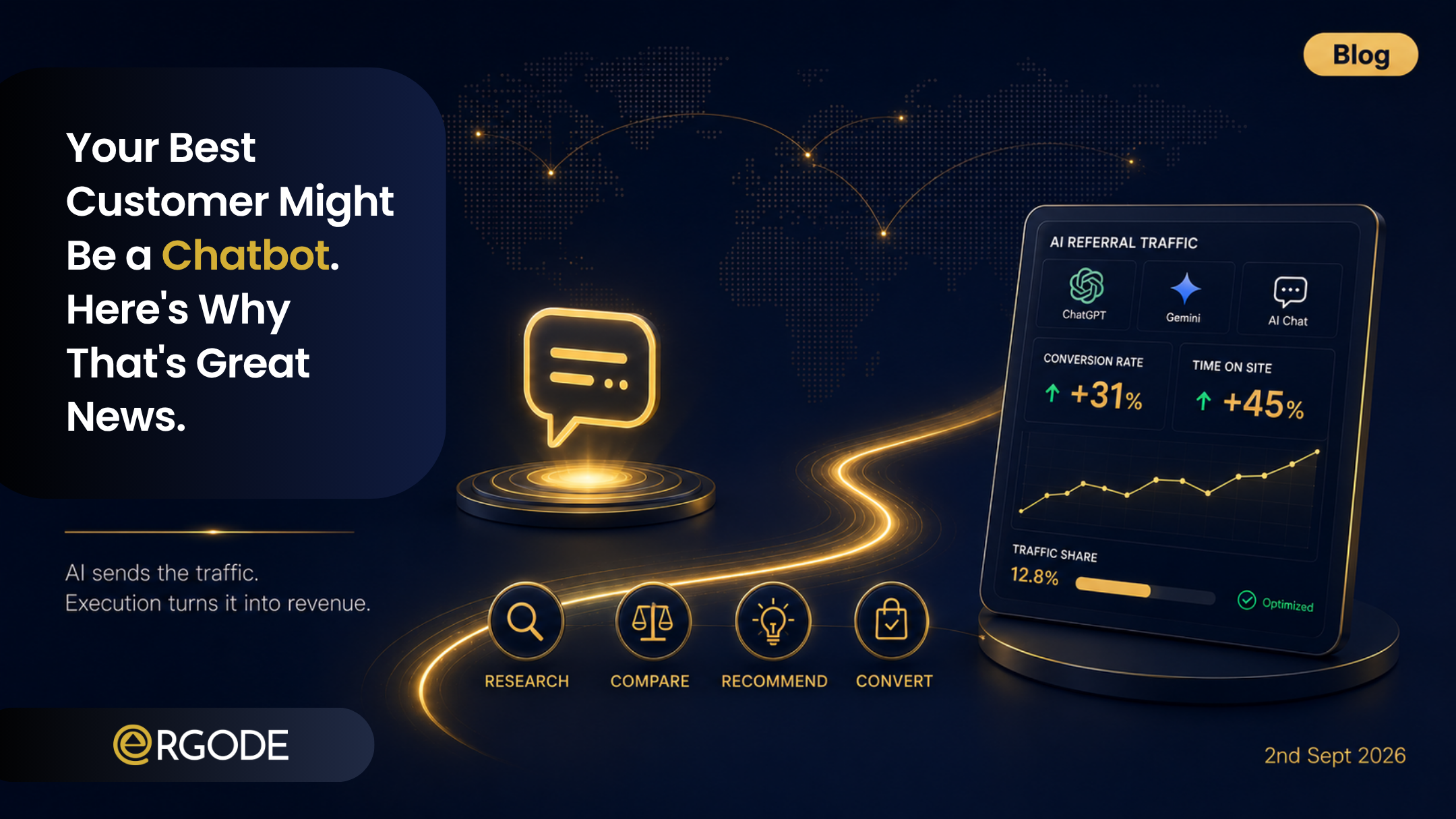
Here’s the number that should make you sit up: traffic hitting online stores from AI tools was 15 times higher in Q1 2026 than the same stretch in 2025. Fifteen times. Not a typo, not a rounding error. And 41% of US shoppers used generative AI to shop in June 2026 alone. This isn’t some quiet trend simmering in the background. It’s already loud. Most brands just haven’t turned around to look.
Wall Street Is Already Doing the Math
When analysts start attaching dollar signs to a behavior shift, you know it’s real. Morgan Stanley thinks AI shopping assistants could handle $190 billion to $385 billion of US ecommerce spend by 2030.
Forecasts are forecasts, sure. But the behavior underneath them isn’t hypothetical. It’s happening in browser tabs right now, while most ecommerce teams are still debating whether this is a “real channel.”
Why Bother Asking Instead of Searching?
Because the old way was exhausting. Type a query, click a few links, squint at spec sheets, hunt for reviews, repeat five times, then finally decide. An AI agent does that entire slog in the time it takes you to read this sentence.
Here’s the twist researchers at INSEAD picked up on: people using AI to shop are less likely to search for a brand by name and more likely to just describe what they need and let the AI sort it out. That’s a quiet earthquake for brand marketing. For years, name recognition did the heavy lifting of getting picked. Increasingly, it’s the actual substance of your product data doing that job instead.
Relax, Robots Aren’t Buying Your Couch Without You
Before this starts sounding like a sci-fi takeover: only 3% of consumers think of AI as an autonomous agent making purchases on its own. A full 83% see it as an assistant, something that hands them good options while they still click “buy” themselves.
So no, the AI isn’t replacing the shopper. It’s replacing the boring part: the comparing, the tab-hopping, the 1am review-reading spiral. Humans still make the call. Which means the brands that win aren’t the ones gaming an algorithm, they’re the ones with product info clear enough that both the AI and the human at the end of the chat feel good saying yes.
The Real Test: Would an AI Actually Recommend You?
An AI comparing products isn’t skipping your brand because your ad budget ran dry. It’s judging you on structured, accurate data: real specs, real availability, consistent pricing, content that answers the actual question instead of trying to trick a search algorithm.
Here’s the catch: a listing optimized to please a search engine crawler isn’t automatically built to earn an AI’s recommendation. Different audience, different rulebook, and right now almost nobody’s studying it.
The stakes get higher for bigger purchases too. McKinsey found 63% of European shoppers already use AI to compare brands and prices before buying, sometimes running trade-offs as detailed as weighing a $700 shipping bill against just replacing the item. If an AI is doing that level of homework on someone’s behalf, “good enough” data doesn’t survive the conversation.
So What Do You Actually Do?
The brands taking this seriously aren’t waiting for a playbook to be written. They’re auditing listings with the same rigor they’d bring to launching on a brand-new marketplace: clean specs, consistent pricing everywhere, content that genuinely answers a question instead of stuffing in keywords. It’s the same discipline that already matters across 100+ marketplaces, just aimed at a newer, faster-growing audience.
The Bottom Line
The search bar isn’t dead, but it’s not the only front door anymore. A growing wave of shoppers are skipping it entirely and just asking for what they want out loud. The brands with data clear enough to earn that recommendation get to be part of the conversation.
Everyone else gets to wonder, quietly, where all their traffic went.