Returns are roughly an $850 billion problem for global retail. And it just got worse. AI-driven return fraud jumped 1,210% in a single year, hitting $1 billion in losses.
Every Q4, brands shift more units than ever. Then January arrives, and so do the returns. Worn items. Opened boxes. Customers who never planned to keep what they bought.
The mistake most brands make? They crack down on everyone and end up punishing their best customers in the process.
Here’s how to tighten returns before the holidays without breaking trust.
1. Flag Serial Returners Before the Label Is Issued
85% of retailers now identify high-risk returners before approving a return request, not after the item is already back in the warehouse.
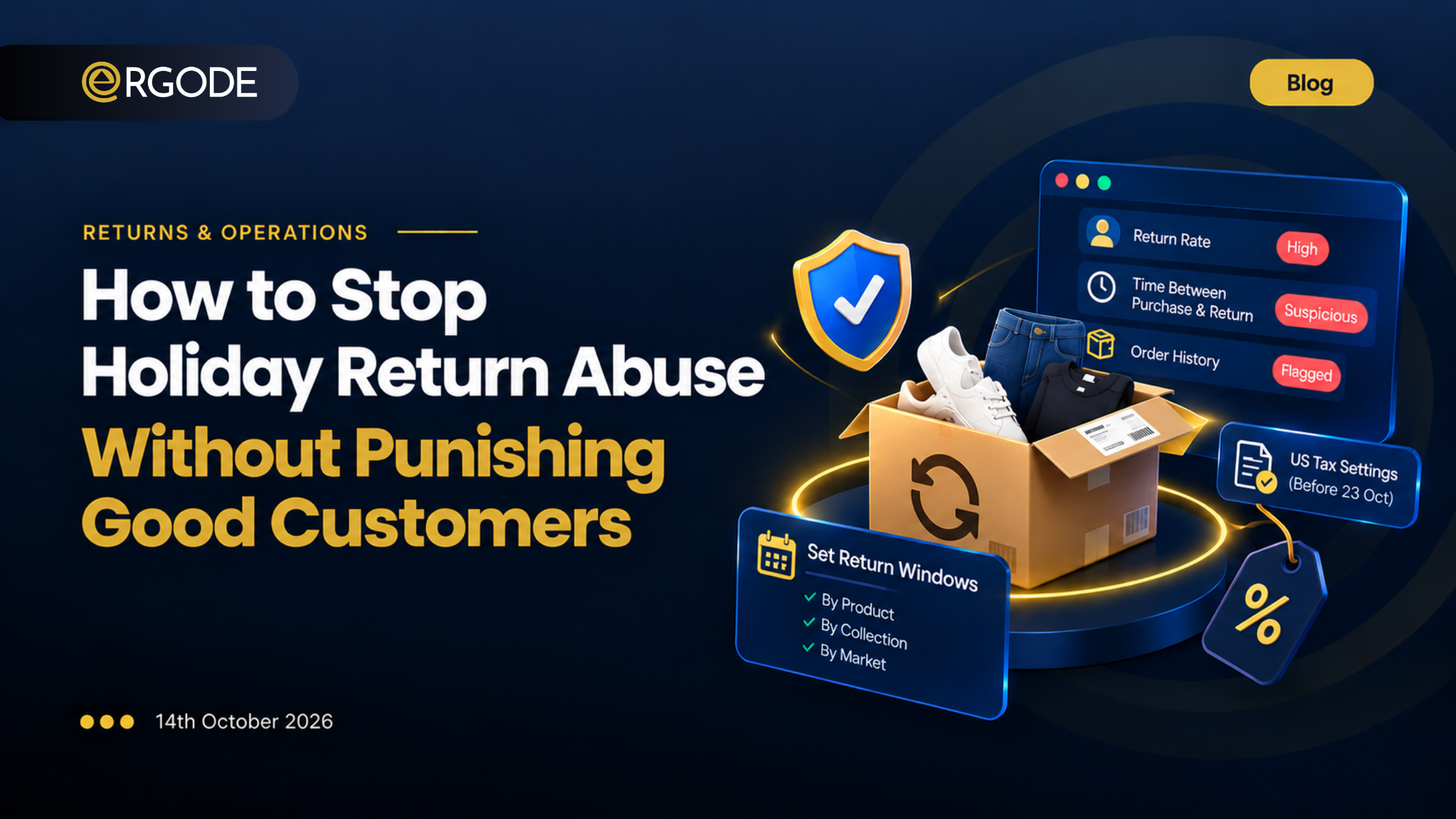
Every return request carries signals: return rate, time between purchase and request, order history. Used together, they tell you almost instantly whether you’re looking at a legitimate return or a pattern worth pausing. For flagged customers, auto-approval turns off. A team member reviews. High-risk requests may require photo evidence before a label is generated.
You’re not refusing returns. You’re making fraud harder without touching the experience for customers who deserve a smooth process.
2. Set Return Windows by Product, Collection or Market
A single sitewide return policy is almost always the wrong policy for at least half your catalogue.
A 30-day window makes sense for a basic product. It makes no sense for a limited-edition item, a sale piece, or a category with historically high abuse.
On 29 September 2026, Shopify launched return rules by product, collection and market. You can now set a 14-day window for sale items, a 60-day window for full-price purchases, no returns on final-sale products, and different rules entirely for different markets.
Tighten where you need to. Leave everything else alone.
3. Check Your US Tax Settings Before 23 October
From 23 October 2026, Shopify Tax stores in the US will apply a tax adjustment on return shipping fees.
If you charge customers for return shipping, check your Shopify Tax configuration now. Missing this going into your busiest quarter means compliance issues you don’t want.
The Bottom Line
The brands that win Q4 aren’t just the ones with the best sales. They’re the ones whose margins survive January.
Tighten by product. Flag by behaviour. And act before the return, not after.