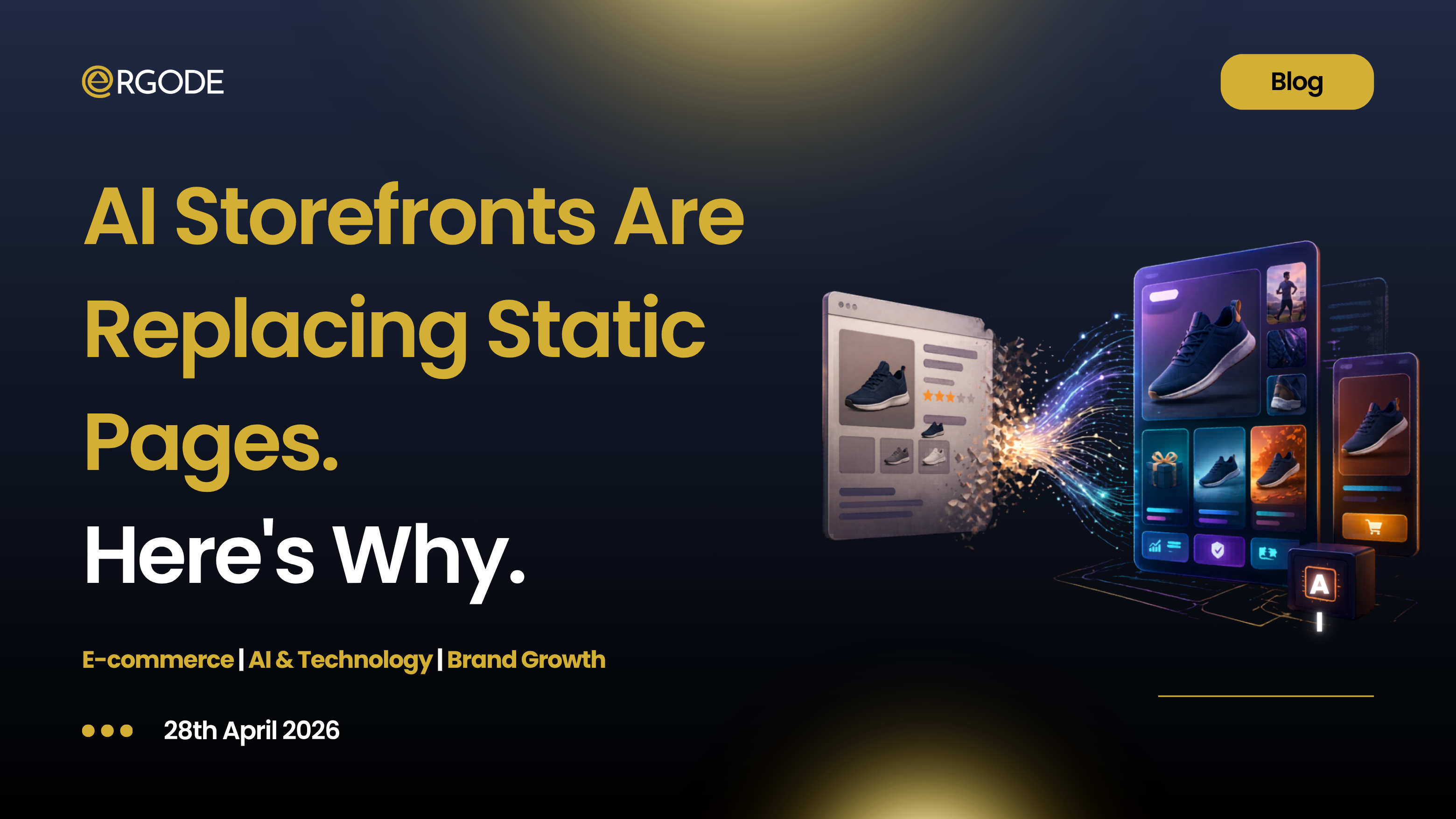
Someone built your product listing once. They wrote a title, chose some images, picked keywords, and hit publish. That was the moment your storefront was born.
It was also the moment it started becoming obsolete.
The static product listing, fixed, unchanged, written for a general buyer at a general moment in time, is one of the last relics of early e-commerce still in widespread use. And it is quietly costing brands more than they realise. Not in dramatic crashes, but in the slow bleed of missed conversions, invisible search placements, and buyers who landed on a page that was not quite speaking to them.
That era is ending. Not gradually. Abruptly.
What a Static Listing Cannot Do
A listing written in January does not know it is now peak gifting season in December. It does not know that a competitor just went out of stock, and buyers are flooding your category. It does not know that the top-performing search term for your product shifted three weeks ago, or that the buyer arriving right now spent the last hour comparing premium options and needs a different language than the one looking for the cheapest deal.
It says the same thing to everyone. Always.
In a marketplace environment where algorithms rank products based on conversion velocity, keyword relevance, and engagement signals, a listing that cannot adapt is a listing that is slowly losing ground, even when the product itself is exceptional.
AI-Generated Storefronts: The Architecture of Now
The shift happening across the most advanced e-commerce operations is not about writing better listings. It is about listings that write themselves, continuously, contextually, and in response to real signals.
An AI-generated storefront operates across several live inputs simultaneously. Buyer behaviour patterns inform which product angles are converting. Seasonality data adjusts the language and imagery weighting automatically. Competitor stock levels and pricing shifts trigger repositioning in real time. Search trend velocity determines which keywords surface in titles and bullet points before the algorithm rewards them.
The result is a product page that is not a document. It is a live entity. One that looks different to a first-time buyer than a returning one. One that speaks urgency when stock is low and confidence when reviews are strong. One that is never stale because it was never built to be permanent.
Where the Industry Is and Where It Is Going
Most brands are still operating in a world where listing optimisation is a quarterly task. A team reviews performance data, rewrites copy, refreshes images, updates keywords, and publishes. Then waits another cycle to see what worked.
The most forward-operating companies have already collapsed that cycle from months to milliseconds. Their listings are not reviewed for relevance. They are relevance, by design, at all times.
This is not a feature on a roadmap. It is already running in the infrastructure of brands processing millions of orders annually, where the gap between a good listing and a great one is measured in conversion rate differentials compounding across thousands of SKUs every single day.
Ergode’s Position in This Shift
Ergode has been operating at the intersection of content intelligence and marketplace performance across 120+ platforms. With a dedicated content management division and a design team focused specifically on optimising digital storefronts, the approach has always been data-led rather than assumption-led.
The proprietary technology infrastructure, built and maintained by 60+ tech experts, does not treat listings as output. It treats them as living signals, things that need to respond to the market as fast as the market moves. For the brands Ergode works with, this means their presence on Amazon, Walmart, and every other marketplace is never static. It is always calibrated to what is working right now, not what worked when the listing was first written.
That distinction, compounded across 2,500+ brand partnerships, is not a small operational advantage. It is a fundamentally different approach to what a product page is supposed to be.
The Cost of Standing Still
Every day a listing stays static, it drifts further from the buyer it was meant to reach. Algorithms reward freshness, relevance, and conversion. A page that was well-optimised six months ago and untouched since is not holding its ground. It is losing it.
The brands gaining ground are the ones whose storefronts are evolving faster than the competition can benchmark them. By the time a competitor analyses what is working and updates their listing, the goalposts have already moved.
The product listing is not dead because the format failed. It is dead because the market outgrew it.
The brands that understand this are not optimising their listings anymore. They are replacing them with something that cannot go stale.
If your storefront looks the same today as it did three months ago, who exactly is it selling to?