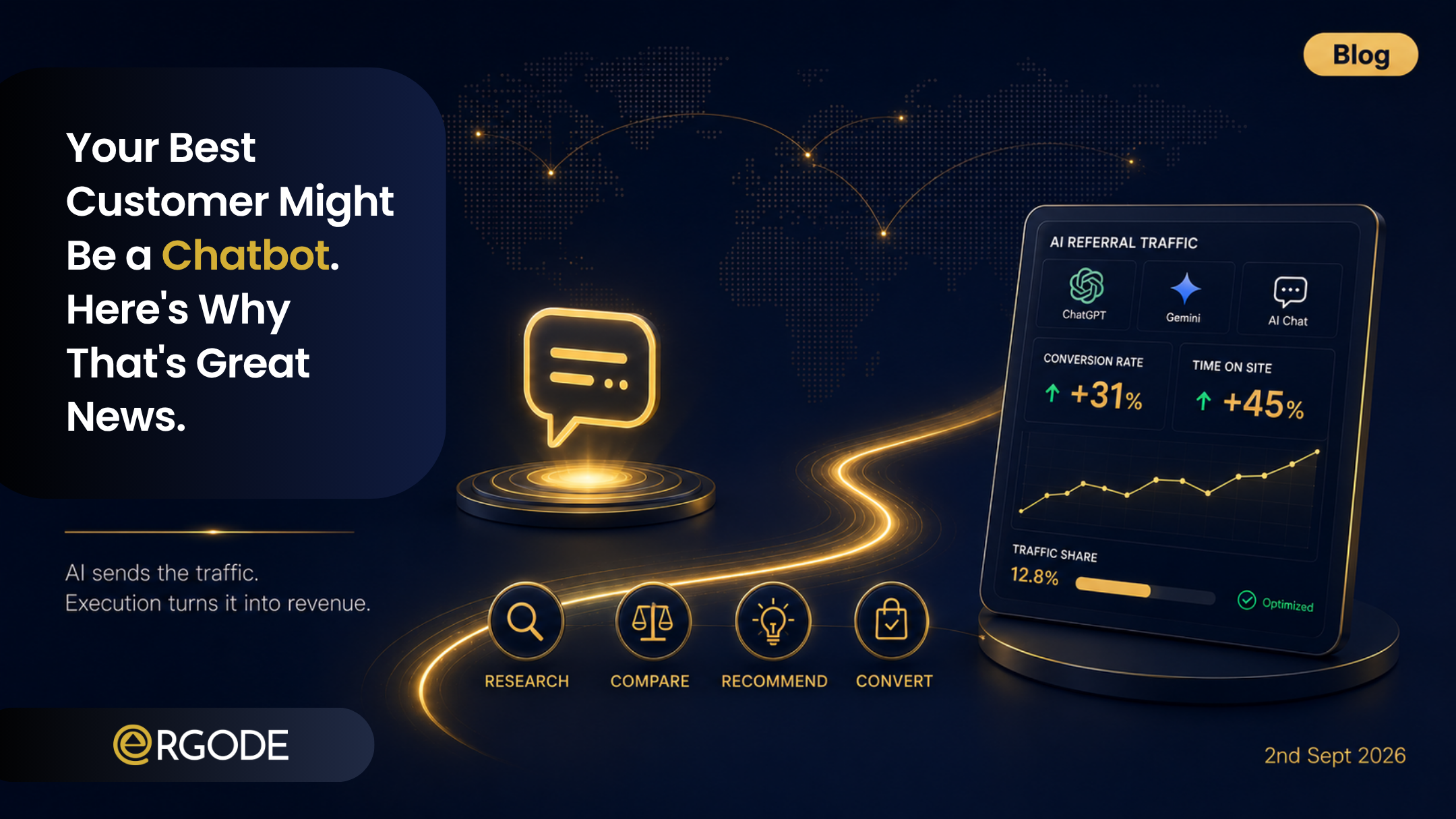
The traditional e-commerce search bar is rapidly becoming obsolete. By 2026, the industry is shifting toward “Agentic Commerce,” an era where AI agents autonomously discover, evaluate, and purchase products on behalf of consumers. This represents a fundamental evolution from AI acting as a passive “supporting assistant” to becoming an “active participant” that proactively handles the entire commerce lifecycle.
The End of Traditional Browsing
The primary driver of this transformation is the emergence of “answer engines” like ChatGPT, Gemini, and Amazon’s Rufus. These platforms are increasingly serving as the “new front door” for shopping, utilizing natural language to match users with products instantly. The impact on traditional e-commerce traffic is significant: approximately 80% of consumers now rely on AI-generated answers for a substantial portion of their searches, which is projected to reduce organic visits to brand websites by 15-25%. Furthermore, research suggests that up to one-third of independent retail marketplace projects will be abandoned by 2026 as these centralized answer engines dominate product discovery.
Architecting for “Agentic Readability”
In an agent-mediated world, optimizing solely for human-readable keywords is no longer enough. Brands must prioritize “agentic readability”—ensuring that Product Information Management (PIM) systems are architected to be seamlessly ingested and understood by machine learning models.
Generative Engine Optimization (GEO): Listings must be adapted for AI search signals. This includes optimizing for engines like Amazon’s COSMO, which prioritizes contextual intent and customer behavior over literal keyword matching.
Granular Data Foundations: Success requires filling out detailed discovery attributes—such as intended use, target audience, and subject matter—within product templates to help AI agents categorize and recommend listings accurately.
Establishing Trust Architectures
As AI agents gain the autonomy to execute transactions, the creation of “trust architectures” becomes a critical requirement. These frameworks provide the necessary guardrails and accountability for autonomous actions, ensuring brand integrity is maintained when a purchase is completed without direct human intervention. This is especially vital for high-consideration categories like furniture or medical devices, where AI systems must provide deep decision support to prevent uncertainty and costly return cycles.
The Strategic Path Forward
The transition is already well underway: one in three e-commerce brands has already deployed AI-powered shopping agents as of early 2026. Forward-thinking organizations like Ergode are leading this shift by mandating AI-related goals for all employees and utilizing proprietary 60-point growth checklists to ensure brands are “AI-ready”. By leveraging advanced technology stacks—including TensorFlow and AI-driven platforms like TeamGrid.ai—brands can modernize their backend operations to meet machine requests as efficiently as human ones.
Ultimately, the winners in 2026 will not be the ones who drive the most traffic to a website, but the ones whose products, data, and brand identity are best positioned to surface within the autonomous, agent-driven journey. Success requires a move away from “front-end glitz” toward operational precision and headless commerce architectures that support a scalable, intelligent ecosystem.